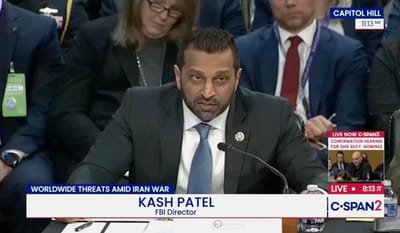
FBI agents visited my home about an article I wrote, and now I can't go to Mexico

It was August 12, 2020, the height of the COVID-19 pandemic, and a blisteringly hot day in New York City. I was confined to my home office on the Upper West Side during the months-long lockdown, while my partner was out of state at the time for a few days. I was hungry after a busy morning of video calls, so I ordered food online from my local sandwich shop. I didn't think twice when the doorbell rang soon after.
I opened the door and saw two FBI agents standing in my doorway, sweaty and out of breath from the five floor walk-up. My heart dropped. Shaken and slightly panicked, a million thoughts flooded through my head. But the first probably shouldn't have been: "Well, shit. This isn't my lunch."
One of the agents identified himself as Will McKeen from the FBI's New York field office, and flashed me his nondescript-looking badge. Taken aback, and admittedly quite hungry, I asked McKeen what this visit was about. He wanted to ask me questions about my prior contact with the Mexican government, he said. My mind immediately jumped to a story I had written a year or so earlier about a hack at one of Mexico's embassies.
Since this was evidently a work-related request and there was no reason for me to speak with them, I declined, referred them to my employer's general counsel, and shut the door.
As I wrote at the time in 2019, I had seen a post on Twitter from a hacker who published links to thousands of documents, including visas and diplomatic passports. Seeing this as a possible story, I contacted the hacker to ask more about the data they had published and how they had taken it.
The hacker told me that they had found a vulnerable server belonging to a Mexican embassy in Guatemala and downloaded its contents. The hacker said they tried to report the issue but were ignored. It was definitely a story, I thought. I reached out to the Mexican government to provide them an opportunity to comment. A representative said Mexico took the matter "very seriously," we published our article, and I moved on.
As a journalist of almost two decades, it's not unusual for me to talk to the authorities; it's part of the job when reporting a story or when giving someone the right of reply. But there are some things a journalist will not share, such as the identity of a confidential source. I've also faced plenty of veiled and spurious legal threats in the past for my work, who view reporting and journalism into their own embarrassing data breaches or security lapses as bad for their reputations.
But seeing feds on my doorstep ready to ask me questions about a story I had published was a new one for me.
~this week in security~ is my weekly cybersecurity newsletter supported by readers like you. Please consider signing up for a paying subscription starting at $10/month for exclusive articles, analysis, and more.
Closing the door was not the end of the matter. Two weeks later, McKeen emailed me asking to set up time to interview me about the story. Per his email signature, McKeen was a supervisory special agent in the FBI's Cyber Division, specifically the Financial Cyber Crimes Task Force.
What I didn't know at the time was that this home visit was the beginning of a protracted year-long effort by the feds to try to get me to answer Mexico's questions about things I hadn't published in the story. Mexico had formally requested the U.S. government's help in seeking answers from me, since I was within the FBI's reach and not within Mexico's.
The visit also sparked my own multi-year effort to try to pry information out of the FBI to explain why it had come to my house to begin with.
Was coming to my home an effort by the Trump administration's FBI to intimidate a reporter? Or an FBI agent acting on his own authority to coax confidential information from a journalist about a source? Or something altogether more sinister? Was I under investigation by the U.S., Mexico, or both, for publishing a story to the embarrassment of a foreign government?
My employer stood its ground. In July 2021, lawyers at my company told the government that it was "unwilling" to share information with U.S. prosecutors beyond what we had already published in my story.
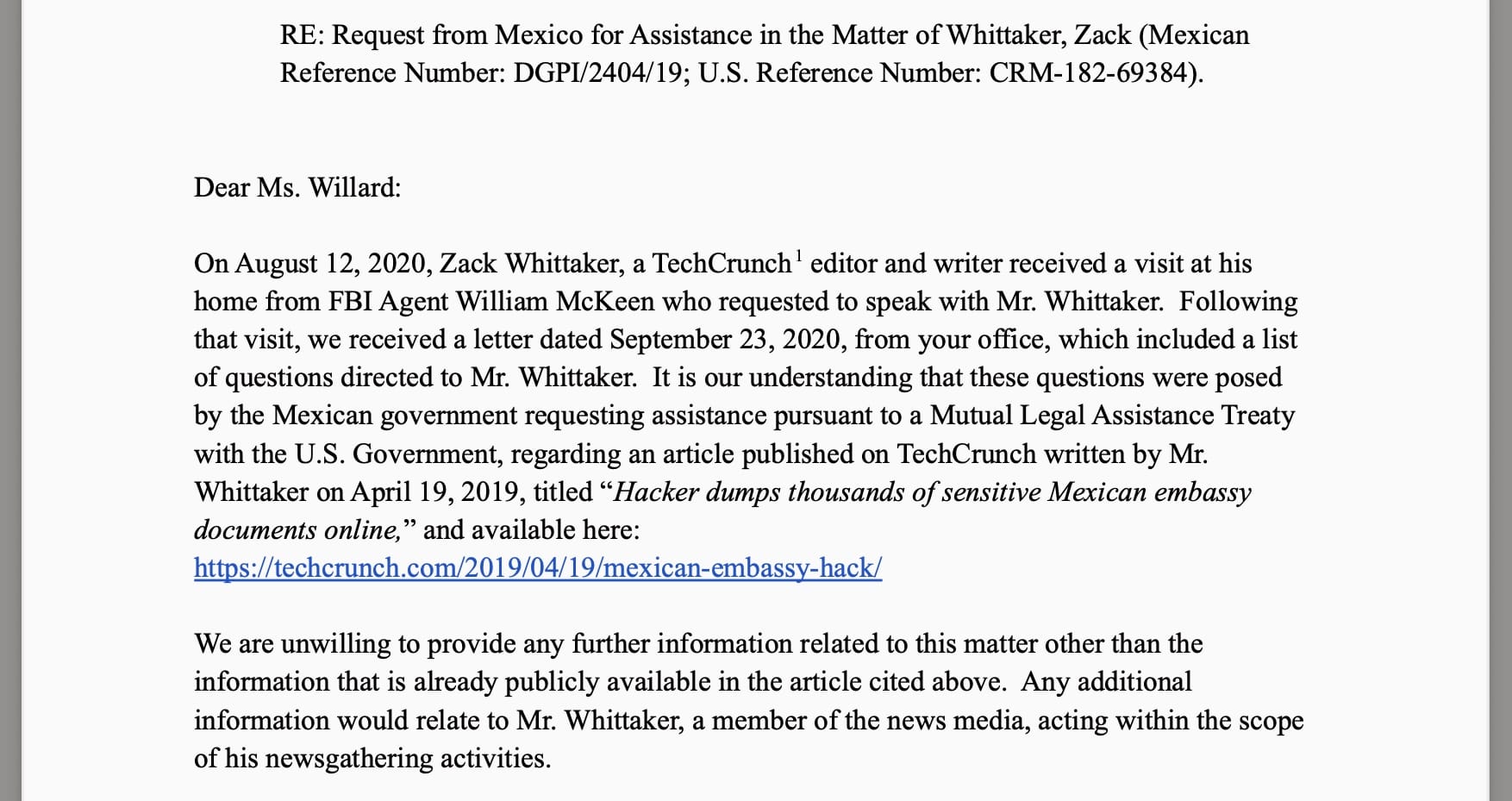
The message was simple: The Justice Department cannot compel me to turn over my notes or anything else outside of what we had published, as this was within the legally protected scope of newsgathering. In other words, the FBI would need to first convince a judge, but to do that would require proof of... well, something. And neither the FBI nor the Mexican government have accused me of any wrongdoing.
More than five years on, the FBI will not say for what reasons it sought information from me to begin with. After filing a Freedom of Information (FOIA) request and a subsequent appeal with the Justice Department, the FBI has refused to disclose why agents came to my house or if I was (or still am) under investigation for my work. As such, I still can't travel to Mexico, or anywhere that relies on its airspace, unsure as to what view authorities there might take if I ever cross into its territory.
The FBI initially denied my FOIA in full, citing the 7(E) exemption, claiming the release would "disclose techniques, procedures, or guidelines for law enforcement investigations or prosecutions and risk circumvention of the law."
My employer appealed, arguing that there was no secret about the FBI "seeing a journalist’s byline on a publicly reported story and contacting the journalist and his company about it." We also argued that the FBI even withheld the letter that my employer had already sent them, declining to share information outside of what we had already published.
In response to our appeal, the FBI denied the request again, citing the same 7(E) exemption, but this time saying that the "material you requested is located in an investigative file which is exempt from disclosure."
This is my brick wall. I've taken the FOIA as far as I can. It's unrealistic to expect the Trump administration will act in good faith by releasing the files, and I don't have the resources to sue.
As you'd expect, I'm left with questions about the case. The one person who would know is McKeen, who has since moved on from the FBI. I reached out to him at Yahoo, my former employer and now his (small world!) to ask him about the case. Aside from an automated out-of-office response, I didn't hear back.
Having the feds turn up at your door isn't anything close to the use-of-force and downright aggression by some federal agencies in the United States today. But it was never right to begin with. Telling my partner when she came home the next day that federal agents had been to the house was not a conversation I ever want to have again. This went on all the while living as a U.S. permanent resident, adding extra fears that the government could retaliate against me by pulling my work permits and upending my life here. I was also concerned that this would loom over any prospects of me one day becoming a citizen. (It didn't.)
Press freedoms don't always disappear overnight; they're chipped away at over time. And if they're not defended, the government can continue to act with impunity against constitutionally protected reporting.
Trump continues to intimidate journalists. Just recently, the FBI raided the home of The Washington Post's Hannah Natanson as part of an investigation into alleged leaks by a government contractor. Critics decried the raid as unprecedented and a brazen attack on press freedoms, not least because Natanson isn't the subject of the government's investigation. (The judge is also pissed off that prosecutors effectively misled him into approving the warrant to search Natanson's home by not first flagging a federal law that was meant to protect journalists from these kinds of raids.)
Worse, protections for journalists have actually taken a huge step back.
In December 2020 and in an entirely unrelated case, Trump's Justice Department secretly obtained court orders demanding that several phone and email companies turn over records belonging to reporters at CNN, The New York Times, and The Washington Post in an effort to identify the source of government leaks to journalists. Biden's Justice Department freaked out when it took office months later and found out this was happening, subsequently told the reporters, and moved to change departmental policy to stop prosecutors from doing this.
In modifying its own rules, the Justice Department effectively swore a pinky-promise that it would no longer demand access to journalists' notes and newsgathering records (like phone and email logs) so long as these were within the scope of their work.
This policy change is what ultimately allowed my employer to rebuff the FBI's efforts to interview me.
But the policy change was never codified into federal law. The draft bill of the PRESS Act drew rare unanimous, bipartisan support in the U.S. House of Representatives. Literally everyone agreed press freedoms are a good thing! But the bill ultimately stalled in the Senate, thanks to a single fuckwit lawmaker, and that was the end of it. Now we're back to square one, because the Trump administration (take two) reversed Biden's policy, promptly allowing the Justice Department to start secretly snooping on journalists again.
Congress could be doing a lot right now, but allowing journalists to do their jobs is never not going to be important.
With more smaller news outlets and independent journalists than ever, and increasingly regular Americans documenting the abuses of the Trump administration in the streets, it's all the more critical to protect the rights of the free press.
Thank you so much for reading ~this week in security~! Please reach out with any feedback, questions, or comments about this article: this@weekinsecurity.com.