this week in security — november 29 2026 edition
THIS WEEK, TL;DR
Fresh hacks hit U.S. government, including Air Force, Treasury, and spy agencies
The New York Times ($): Just an astoundingly bad week for the U.S. government's cybersecurity posture. First, the Times reported that several agencies in the U.S. intelligence community, including the CIA, were investigating a breach of unclassified data related to an open-source intelligence system (think commercially available data that the government purchased, such as satellite feeds) but is still highly sensitive data given U.S. spies were using it! The feds suspect the Artex AI-powered hacking tool was used in the attack. Then, the Treasury's FinCEN unit for reporting suspected illegal financial activity (like money laundering) was hacked, all the while its CIO was vibe-coding a Civilization-esque game clone (you can't make this up…). And then, Reuters ($) reported (and NBC News ($) confirmed) that the Air Force's flagship cloud system was breached earlier this year and we're just learning about it now. The system is reportedly used for handling personnel data, pay, logistics, maintenance, collating radar feeds, and tracking bombs and missiles at hundreds of locations. Not great! To call this a weapons-grade fustercluck doesn't quite do justice to the damage to national security *on top* of the previous federal hacks.
More: Microsoft | The Verge ($) | 404 Media ($) | Bloomberg ($) | The Register | Sky News | Nextgov | Associated Press | Don Moynihan | @dustinvolz | Nicholas Chaillan

U.K. cyber agency says AI-driven hacks are exposing decades of weak security
U.K. National Cyber Security Center: The U.K. cyber boffins are following in the footsteps of the FBI in warning about Artex, Cairn, and other open-source AI-powered penetration tools, saying they've seen a "marked" increase in these AI-driven attacks in recent months. By using these semi-autonomous tools, hackers can relatively easily compromise networks that have simple security flaws, like exposed or weak passwords, and lacking multifactor authentication. The NCSC says these attacks are noisy, as they trade stealth for speed, but these attacks are clearly working, as Italy and Switzerland also warn of autonomous attacks hitting their critical infrastructure. Microsoft says that China's Salt and Volt Typhoon hacking groups are also relying on Artex, as they seek to speed up their attacks. Expect these attacks to continue as these open-source tools continue to proliferate. The U.K.'s advice? "Building strong foundations has never mattered more." Exactly. Do the security basics!
More: TechCrunch ($) | Cyberscoop | Bleeping Computer | The Record | Swiss NCSC | Le Temps | @campuscodi
1Password said internal systems hacked, but customer passwords are safe
TechCrunch ($): Alarming news as password manager maker 1Password said it was hacked and its internal systems compromised. The company said that no password vaults were at any time accessed or were "available to" the attacker. That's the silver lining (assuming that holds up!), but some customer names and email addresses used for signing in were accessed, so be on alert for phishing attempts. The attacker broke in via an employee's corporate GitHub account, so how that access was allowed will likely be a key focus for incident responders. 1Password hasn't said how many customers are affected, and didn't respond to my request for comment. (Disclosure: I wrote this story!) Also… Password manager pCloud Pass similarly said in a Reddit post that some customer email addresses were exposed during an incident, but that password vaults are safe.
More: SecurityWeek | Bleeping Computer | Startup Fortune | Ask Woody | Victor Augusteo | @adam_caudill
A bunch o' breaches: Turnitin, Radware, SAP, AFP, FIFA, Todoist, and U.K. government
Alright, let's blast through a few of this week's major breaches in bulk… starting with… Plagiarism checker Turnitin disclosed a hack and is investigating if any data was taken, per Bleeping Computer… also, cyber giant Radware said some customer cloud keys were exposed via an unsecured and publicly exposed internal dashboard (whoops)... Software giant SAP confirmed a source code breach (spare a thought for those poor hackers having to dig through that software hot-mess) but no evidence that customer data was taken… Meanwhile, news agency AFP shut down some systems after detecting a cyberattack on a platform used by clients to download its content… Also, the U.K.'s welfare and benefits department took down most of its systems after reporting a cyberattack, affecting a ton of Brits, per the Financial Times ($)... and lastly in insufferable acronyms, football body FIFA also confirmed a hack after intruders made off with some personal and business information.
More: BBC News ($) | Associated Press | ESPN | DataBreaches.net | SecurityWeek
~ ~
~this week in security~ is my weekly cybersecurity newsletter supported by readers like you. Please consider signing up for a paying subscription starting at $10/month for access to exclusive articles, analysis, and more.
You can also submit a one-time tip to show your support, or consider gifting a paid subscription.
~ ~
THE STUFF YOU MIGHT'VE MISSED
Most of the known exploited flaws in 2026 require no login or clicks
XploitDigest: New analysis shows around 57% of flaws listed by CISA as exploited require no login or clicking anything. The analysis was conducted by analyzing CVSS vulnerability severity scores of known exploited CVE entries. This includes flaws in products made by Citrix, Ivanti, and other enterprise tech makers.
Hackers are breaking into Check Point management servers
Greynoise: Speaking of… Security researchers at Greynoise have identified a hacking campaign targeting Check Point security management servers, allowing unauthorized access to 22 victim organizations across 17 countries. That number is likely an undercount given limited visibility. Bleeping Computer has more.
Meta will 'consider' pulling encryption services from Canada if lawful access bill passes into law
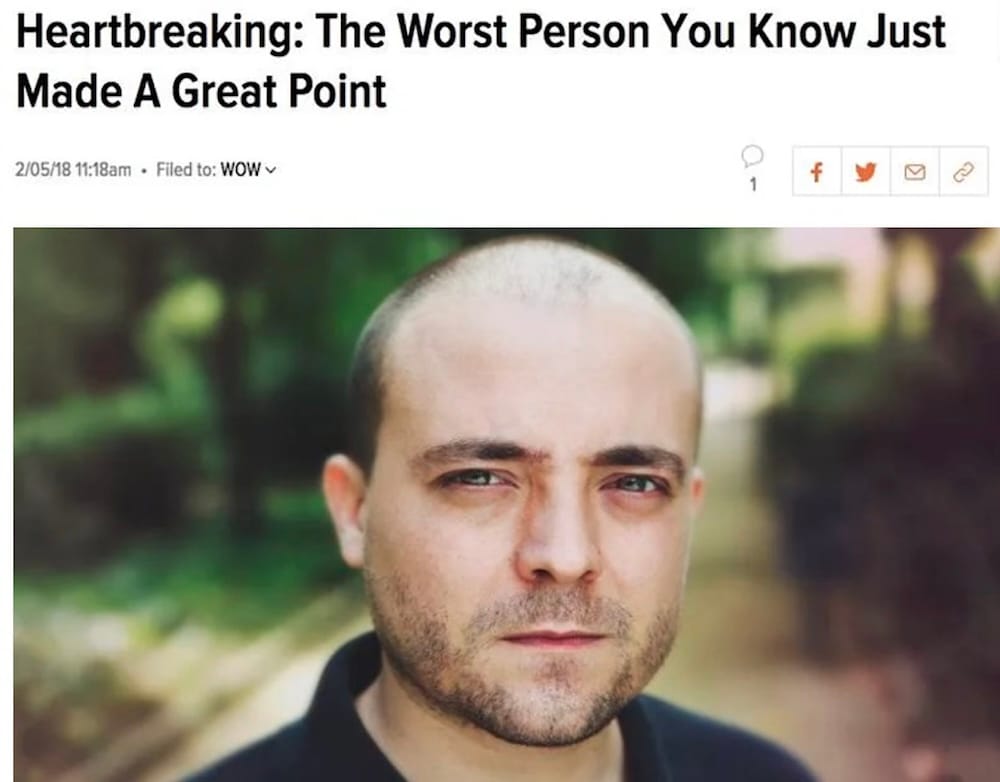
CBC: The Facebook and Instagram owner says it would "consider" pulling its encryption services from Canada if the country's parliament passes a widely panned surveillance bill into law as is. Bill C-22 would force tech giants to backdoor their systems for authorities to access customer data. Meta said it's "not technically feasible to comply" with the law while still offering secure comms to Canadians. It's basically just this meme:
Age verification checks about to roll out in New York and California
Electronic Frontier Foundation: If you live in either New York or California (or close enough to get lumped into the nearby catchment), get ready for annoying age verification popups and driver license scans before you can access your favorite websites and apps. Starting January 2027, the states will enforce age checks on social media sites and beyond. (I've written before about why age checks are a bad idea!)
Tor fixes bug that could expose users' real IP addresses
Calif: The smart folks at security research firm Calif (of PHP2Shell and Java4Shell fame) found another major bug, this time in the Tor Browser that allowed certain popup windows to leak the user's real IP address. The bug was patched in Tor Browser 15.0.23.
Credit card skimming code found on popular websites for Black Friday
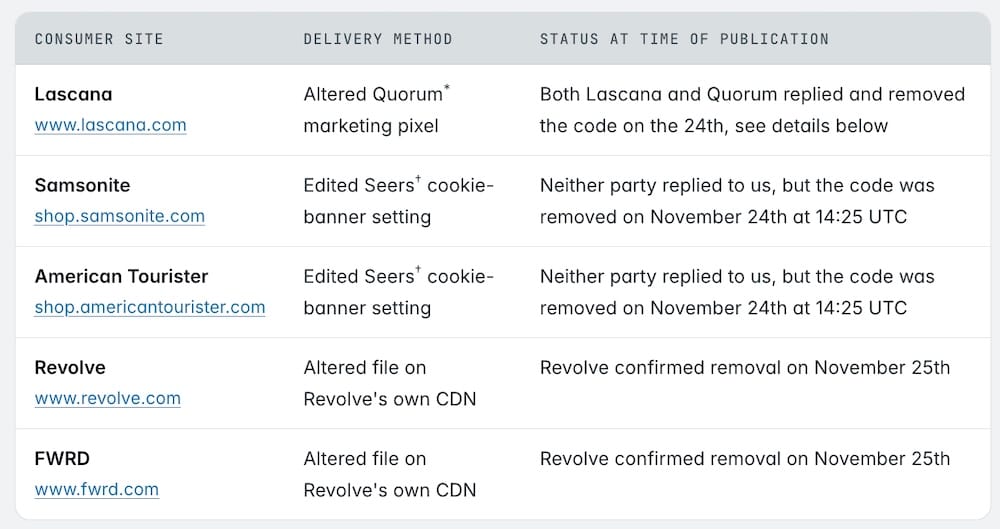
Infohawk: Samsonite and Revolve were among several online stores with third-party code on their websites that was maliciously modified to steal a person's credit card number when they entered it at the checkout. The code was later removed. Infohawk has IOCs so you can check your own logs if you run an online store.
India's election site exposed data via a simple security bug
Reuters ($): One of Reuters' own reporters discovered what appears to be an IDOR bug on India's Election Commission's website, which allowed sequential access to people's personal details, including names and dates of birth, as well as documents of voters while logged-in. Security researcher @squeal verified the reporter's findings. This was an excellent finding! More words for you via Mint.
~ ~
By the way! 🚨 If you or your company is interested in sponsoring ~this week in security~, reach out today! I have sponsorship availability open for the remainder of 2026, and into 2027. Lock-in before end-of-year for a 10% discount! 🚨
~ ~
OTHER NEWSY NUGGETS
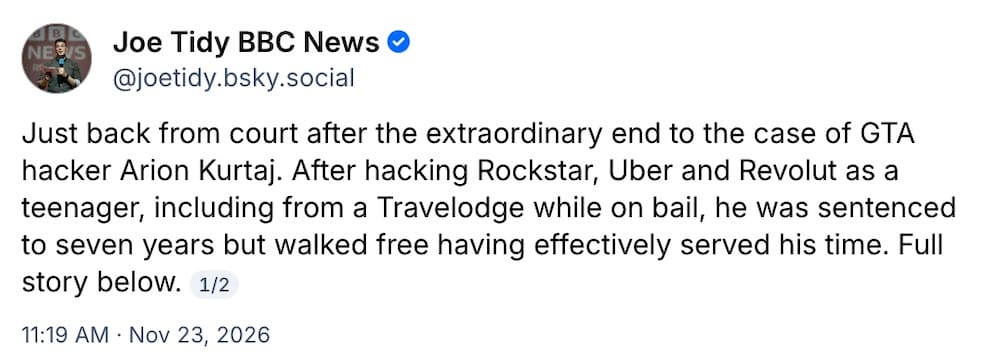
British hacker's lucky day: Arion Kurtaj, 21, the then-teen hacker who pleaded guilty to breaching Uber and Grand Theft Auto-maker Rockstar Games, was sentenced and immediately released by a judge, to much surprise in the courtroom. The judge told him: "Don't let this happen again." I honestly hope this kid turns his life around. (via BBC News ($), HelpNetSecurity)
Another billion-plus breach: A massive database containing close to 2 billion stolen credentials was found exposed online, with no password needed to access it. The breach shows how infostealer malware is still a massive source of stolen passwords and credentials. (via Wired ($), ExpressVPN)
Colorado cyber outage: Colorado's state app, myColorado, which residents use for identification and accessing state government services, has been hacked, sparking ongoing downtime. Some 150,000 people had their information stolen, but the state hasn't said what kinds of data were taken yet. Local media reports that files in the app's document storage were compromised, including passports, vehicle registrations, and insurance cards. (via ABC7 Denver, The Record, CBS News)
Iran hacked dozens of ships: U.S. officials reckon Iran is likely behind hacks targeting some 50 oil tankers and ships carrying liquified gas, per WSJ ($) and confirmed by NPR (with audio), by exploiting the "FortiBleed" bug in Fortinet firewalls used on boats to hack in and access the navigation controls. The Financial Times ($), meanwhile, reports on the alleged Iranian hacking unit known as CyberAv3ngers, which is targeting freezer units across France and Europe.
Ports pwned: Also from the FT ($)… U.S. ports, including in Texas and North Carolina, are seeing an uptick in cyberattacks, in some cases halting exports and snarling up shipping traffic. Other ports are heavily investing in cyber defenses as shipping delays can have lasting knock-on effects. (via The Hill, Marine Insight)
Allstate's suspiciously mum on outage: Insurance giant Allstate has gone eerily quiet for the past few days during an ongoing and now lengthy outage. People are starting to notice, but Allstate has said zilch. (All eyes on the SEC filings, eh..!) Prudential is also experiencing a similar outage, with a website banner saying that "online account access is currently unavailable." (via WSJ ($), TechCrunch ($), /r/IBMRetirees)
~ ~
THE HAPPY CORNER
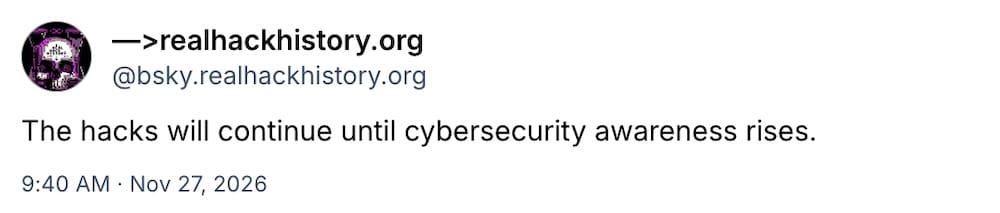
Alright, alright, let's take a moment of calm in the Happy Corner™. Honestly, I sometimes wonder if the Cybersecurity Awareness Month of October never actually ended… hack after hack, after breach after attack, after hack...
In some great news this week, my cyber-reporter friend @gregotto earned himself CVE-2026-124251 for finding a vulnerability in a WordPress plugin used by tens of thousands of people. He wanted to see what it was like first-hand to look for vulnerabilities using AI and how to get them reported. It's awesome seeing security reporters get mucked into the trenches. Check out his mini thread and his story for more details.
Meanwhile… *rings bell* Get your Microslop t-shirts! Get yer t-shirts here! *rings bell*

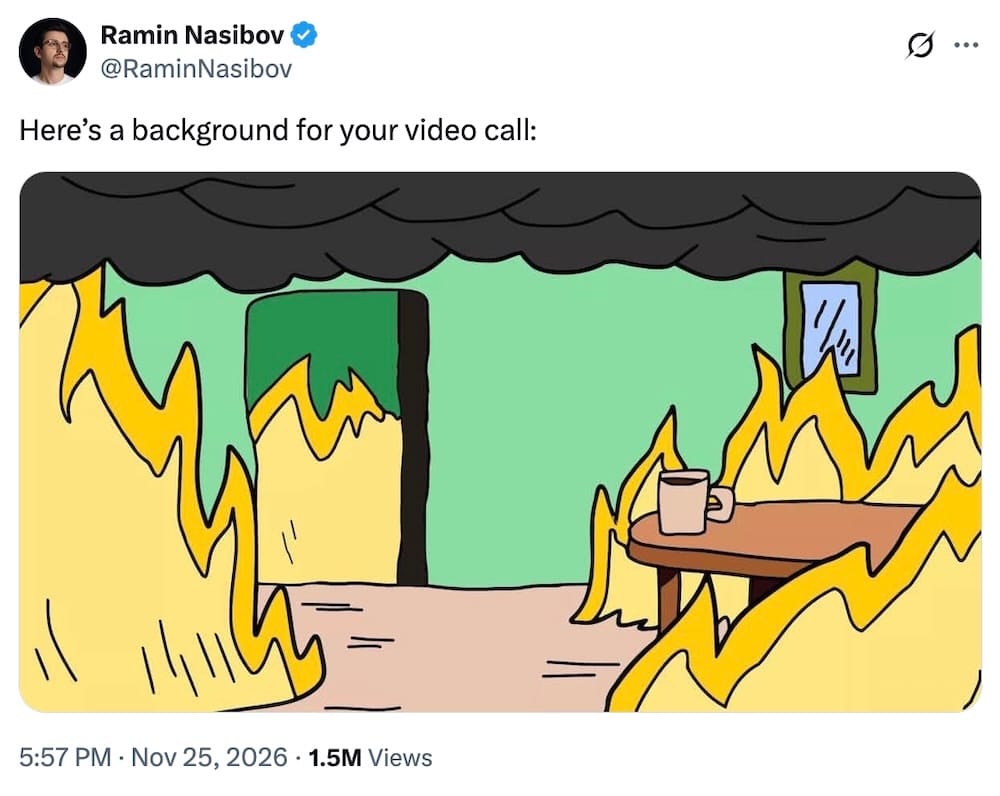
…and get your free "this is fine" background for your next video call. What a perfectly fitting way to join your next company-wide all-hands meeting.
And lastly… Since it's ~the holiday season~, I've rounded up some of my favorite gift suggestions for your security and privacy-minded friends and family this holiday season. These gifts range from productive to creative, and for techies to tinker with. I also dive into some of the tech you probably shouldn't gift this year!
 Zack Whittaker

Have good news to share? Get in touch! this@weekinsecurity.com.
~ ~
CYBER CATS & FRIENDS
This week's cyber cat is Pollux, who can be seen here guarding access to The Mighty Password Manager, keeper of secret keys and payment card lore. Thou shalt not pass this chonky beast, unless you can tempt Pollux with snacks. Thanks so much to Bill for sending in!

🐈 Send in your cyber cats! 🐈⬛ Drop me an email with a photo of your cat (or non-feline friend) and their name and they'll appear in a later newsletter!
~ ~
SUGGESTION BOX
That's all for this week's newsletter, thanks so much for joining! I hope you all (in the U.S.) had a great Thanksgiving and were able to get a restful few days. I'll be back next Sunday as usual with everything you need to know from the week in cyber.
If you liked this week's newsletter, please share it! And you can always reach me by email with any feedback, comments, questions, and other tidbits of next week. I'm also on Bluesky and Mastodon as well.
Have a great rest of your week — you deserve it.
See ya,
@zackwhittaker