Outages keep piling up. Or are we just noticing them more?
When we see news of a big tech outage, it's usually widespread enough that people are noticing and scrambling for answers. As someone often tasked with writing the story, one of the first questions I hear is… is it cyber? The immediate implication is that there was some kind of malicious hack or cyberattack that ground systems to a halt.
And the answer, as a cyber journalist for a decade-plus, is that it's almost always, no.
There've been a handful of hair-raising days in my career where cyberattacks have been broadly visible and widely felt across the global web. In 2017, a distributed denial-of-service attack on Dyn, a provider of high-reliability internet and domain name resolution used by a bunch of popular tech services, overloaded its systems with junk traffic and rendered web services like Reddit and Spotify inaccessible. And, a year later, hacking tools developed by the U.S. government were leaked online and weaponized by North Korea to indiscriminately deploy ransomware on vulnerable computers, including mass disruption across the U.K. health service and beyond.
The last couple of weeks have felt like outage after outage, from Microsoft's day-long cloud collapse to the U.S. nationwide grounding of flights. It's easy to assume that there's some kind of connection or correlation linking them.
I don't know if we're experiencing more outages than usual. But this recent scattering of downtime follows a pattern of sorts, whereby a big outage happens, people notice it because they're naturally affected by it, and the news media picks up on it because it's now a big story where everyone is talking about it.
The outage generally resolves, and journalists like me might eke out a couple more stories about how the outage happened and what we can learn. But then we're all a bit on edge afterward and more hyper aware when something doesn't work as it should, and so any minor outage can quickly spiral into another big news event. It's human nature.
~this week in security~ is my weekly cybersecurity newsletter and blog supported by readers like you. Please consider signing up for a paid subscription starting at $10/month for access to exclusive articles, analysis, and more.
Or, you can submit a one-time tip or gift a paid subscription to show your support!
In the space of a week in November, we had:
Microsoft's cloud outage, which knocked Outlook email offline for about a business day, but then the outage seemed to get worse and affect more Microsoft services as the hours dragged on. The company confirmed the outage was caused by a trio of errors and not a cyberattack. Microsoft's last major outage was in September, and lasted longer than this recent patch of downtime. But while that outage got some media attention, it didn't get nearly as much mainstream attention as other outages, like this recent one.
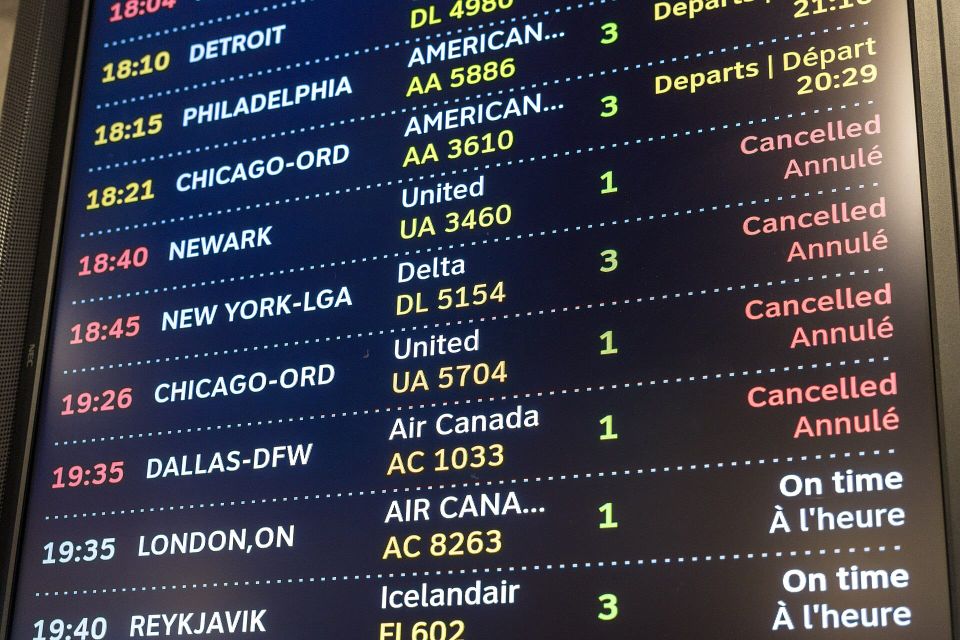
A day later, the Federal Aviation Administration issued its second-only nationwide ground stop since 2001, blocking all flights from departing for more than four hours because of a router replacement that went wrong. Why this router replacement had to happen on a Friday afternoon is ultimately a question for the U.S. government to answer, but the timing of this so close to Microsoft's disruption had people wondering if there was a link or a cyber component. There wasn't.
United Airlines also had a brief, separate outage that was resolved within about an hour, per CNN's reporting. An internal web tool used to determine the weights of departing aircraft (for calculating fuel consumption and suchlike) was unavailable, preventing United flights from taking off. There have been several similar outages across the airlines in the past year or so, and this outage was no different and fixed quickly. But as is the nature of the airline industry, any minor blip can have a ripple effect that can snarl up other flight departures, and take days to recover.
And, an outage affecting Chase's banking app largely froze balances and delayed transactions for a couple of hours while a software bug was figured out, with some knock-on downstream effect on banking partners. Much like airlines, when banking transactions are held up at one place, they're likely to have downstream effects across the banking system.
Why are we noticing these outages more? It may be in part because the nature of cybersecurity has changed in the past few months alone, particularly with the recent advent of AI-driven cyberattacks, which are getting broad media attention.
But these outages aren't related to cyberattacks (yet). These outages are happening because of the decades of technical debt that critical industries like airlines have accumulated and done little to resolve. Some of these aging, legacy IT systems have been operational and largely unchanged for years, and are increasingly held together by convoluted fixes, akin to deploying reams of digital string and sticky tape. All the while, the teams dedicated to fixing and maintaining these crumbling systems don't get the investment or budgets that they need, but the corporate executives can still take home a fat bonus at the end of the year.
If we also couple all this with the countless people with decades of institutional knowledge and experience who maintain these systems but have been laid off, passed over for some AI slop, or affected by the sweeping DOGE cuts of 2025, we're now in this perfect mess where outages have become huge events that require far more human energy to figure out and detangle.
All of this comes at a time when AI-linked cyberattacks are now becoming a thing. Yes, there are still plenty of non-AI hacks going on that are highly successful and lucrative for financially motivated cybercriminals. But we've also seen in the past few months a number of actual AI-driven cyberattacks targeting big companies, such as IT giant ConnectWise and network security firm Barracuda, and across entire industries, like South Korea's financial sector, driven by the proliferation of open-source AI-powered penetration testing tools like Artex.
Instead, we have to confront the fact that outages will keep happening because we've let the internet basically fester in its own underinvestment for decades. This technical debt exposes us to cyberattacks, because the more that we realize how rickety and broken our interconnected world has become, the easier it will be to cause disruption by targeting weak spots that can have cascading impact.
For now, when someone asks me if an outage is cyber related, I'm still inclined to say no. But that will almost certainly change soon if we don't invest in the technical and cybersecurity basics first.
Thank you so much for reading ~this week in security~. If you like this article, please share a link on your social media! Reach out with any feedback or comments about this article: this@weekinsecurity.com.